Until recently I have been locked out of this blog. Now I am back and will begin writing again, so the very few followers that have remained need not worry.
Thursday, 18 September 2014

Monday, 10 February 2014
Should we be pitting science fact against religious belief?
On the 4th of February, the Creation Museum in
Petersburg, Kentucky played host to what may have been the most watched
debate on the subject of evolution. With the live-stream seen by over
500,000 viewers, Bill Nye "The Science Guy" took to the podium to
discuss evolution with Australian creationist Ken Ham, head of the
Answers in Genesis organisation. The whole debate can be viewed here.
The debate lasted for a frustrating two-and-a-half hours; from the start it was clear that nothing that Nye could say wouldn't be met with a (frequently nonsensical) rebuttal from Ham who's stalwart faith in the Bible would be somehow noble if only he didn't try to inflict it on others. Ham and the Answers in Genesis organisation believe that the world is only 6000 years old (despite the fact that there are trees older than that) and that the "word of God" should take precedent over all human knowledge.
Personally, I found the whole thing rather painful to watch and found myself wondering if the debate should even have taken place. Comparing scientific theories (not "ideas" or "concepts" but well-substantiated explanations the natural world) with religious belief is akin to comparing apples to floor tiles. The two are just not of a level.
Since the Scopes Monkey Trail in 1925, the evolution "debate" has really just spun in a circle. With fact-based replies handily available to every Creationist claim it has always surprised me when this row leaves internet comment sections and makes it in to news.
However it really shouldn't. The acceptance of a 2000 year old text as scientific evidence by some people would appear to be an unfortunate fixture of our age. The separation of religion from science in the US, for example, seems to be degenerating. With creationism being taught as a science in Texas and evolution dismissed as "dogma" (in a move against the US consitution) it leads on that yet another generation will grow up lacking key understanding in the workings of science theory and rational thought.
This is not a phenomenon limited to America either. Earlier this year the Creationist Noah's Ark Zoo Farm in Bristol was awarded the LOtC Quality Badge by the Council for Learning Outside the Classroom. This is a zoo that asks the question "Did life arise naturally or supernaturally?" and seems to have rather made up its mind already.
As much as it pains me to agree with Richard Dawkins (his evangelicalism is rather an embarrassment to most atheists), I do believe that the greatest threat to scientific education is religious fundamentalism. Whilst it is well within everyone's rights to teach religion to their children and try to get their views heard across the world, the teaching of such belief belongs in Sunday schools and R.E lessons, not the biology classroom.
Scientific literacy is desperately needed in our society and blurring in religion with the teaching of science will just confuse the lines between the research of ideas and the acceptance of "facts" . The ability to collect and process information for oneself is vital in this age where various news outlets are easily able to sway a population with selective reporting.
The Nye vs Ham debate just showed the issues that arise when you put religious belief on the same footing as evidence-based scientific theories. The argument was never going to go anywhere, as the players just talked in circles, neither one shaken by the others' words. Nye's views would only have been affected had Ham provided evidence (which he obviously failed to do) and Ham's views are unlikely to have ever be affected by anything in reality.
In all, the debate was pointless and probably should not have taken place. However it did lead to the thought that, if Ham was correct, then God created the world 1000 years or so after the Babylonians invented beer. Which does go some way to explain the platypus, I suppose.
For The Yorker Online, 10th February 2014
The debate lasted for a frustrating two-and-a-half hours; from the start it was clear that nothing that Nye could say wouldn't be met with a (frequently nonsensical) rebuttal from Ham who's stalwart faith in the Bible would be somehow noble if only he didn't try to inflict it on others. Ham and the Answers in Genesis organisation believe that the world is only 6000 years old (despite the fact that there are trees older than that) and that the "word of God" should take precedent over all human knowledge.
Personally, I found the whole thing rather painful to watch and found myself wondering if the debate should even have taken place. Comparing scientific theories (not "ideas" or "concepts" but well-substantiated explanations the natural world) with religious belief is akin to comparing apples to floor tiles. The two are just not of a level.
Since the Scopes Monkey Trail in 1925, the evolution "debate" has really just spun in a circle. With fact-based replies handily available to every Creationist claim it has always surprised me when this row leaves internet comment sections and makes it in to news.
However it really shouldn't. The acceptance of a 2000 year old text as scientific evidence by some people would appear to be an unfortunate fixture of our age. The separation of religion from science in the US, for example, seems to be degenerating. With creationism being taught as a science in Texas and evolution dismissed as "dogma" (in a move against the US consitution) it leads on that yet another generation will grow up lacking key understanding in the workings of science theory and rational thought.
This is not a phenomenon limited to America either. Earlier this year the Creationist Noah's Ark Zoo Farm in Bristol was awarded the LOtC Quality Badge by the Council for Learning Outside the Classroom. This is a zoo that asks the question "Did life arise naturally or supernaturally?" and seems to have rather made up its mind already.
As much as it pains me to agree with Richard Dawkins (his evangelicalism is rather an embarrassment to most atheists), I do believe that the greatest threat to scientific education is religious fundamentalism. Whilst it is well within everyone's rights to teach religion to their children and try to get their views heard across the world, the teaching of such belief belongs in Sunday schools and R.E lessons, not the biology classroom.
Scientific literacy is desperately needed in our society and blurring in religion with the teaching of science will just confuse the lines between the research of ideas and the acceptance of "facts" . The ability to collect and process information for oneself is vital in this age where various news outlets are easily able to sway a population with selective reporting.
The Nye vs Ham debate just showed the issues that arise when you put religious belief on the same footing as evidence-based scientific theories. The argument was never going to go anywhere, as the players just talked in circles, neither one shaken by the others' words. Nye's views would only have been affected had Ham provided evidence (which he obviously failed to do) and Ham's views are unlikely to have ever be affected by anything in reality.
In all, the debate was pointless and probably should not have taken place. However it did lead to the thought that, if Ham was correct, then God created the world 1000 years or so after the Babylonians invented beer. Which does go some way to explain the platypus, I suppose.
For The Yorker Online, 10th February 2014
Thursday, 16 January 2014
RadFems and I
A detour from my usual content...
The Horsehoe Theory, born out of political science, observes that the far left and far right linear ends of the political spectrum resemble each other more than the moderate areas of either view. Hence the idea that political views and their real-world applications are more easily mapped in the curve of a horseshoe than a straight line.
This phenomenon has more recently been observed in the world of Radical Feminism. Whilst most decent human beings would consider themselves feminists in the true sense of the word - a feminist being one who desires equality for all - a very small but increasingly vocal group has begun to taint societies view of the movement.
The goal of RadFems appears not to be the equal treatment of all, but the degradation of men for the benefit of women. Perhaps I have "internalised misogyny" but to me that seems to replace one bigoted system with another rather than generating any improvement.
My first encounter with the world of Radical Feminism was, of course, in that circlejerk of ego and victim complexes that is Tumblr. In a post now deleted a young woman took it upon herself to explain why the female mind is best suited to the study of the arts and social problems rather than sullying itself with the "masculine STEM fields". I naturally took umbrage with this and clicked through to the main blog, expecting a wall of Daily Mail-esque conservatism. In fact, she was a RadFem and Social Justice Warrior (a group who appear to have confused social justice with hating white men).
I never quite managed to follow her line of thought as to why my "creative feminine mind" would be sullied by pursuing my chosen career path but it was enough to realise that the movement of radical feminism had come full circle. Now the aim is to hate those based on characteristics that they were born with. Are you a straight, white male? Well then apparently you are the scum of the earth and most likely a rapist too.
For all my misgivings, I do believe that the general RadFem is mostly harmless. Likely aged around 15, she blogs from her comfortable bedroom in a generally affluent suburb in a comparatively safe Western country. She hates men, specifically taking issue with those of the male gender that look at her funny, cat-call and take up too much room on public transport.
People are not stereotypes to be classified into "victims" and "oppressors" but rather individuals, good or bad, who are to be given the same rights and freedoms as everyone else. Men in general are not evil, individuals among them may be but they do not represent the gender as a whole. Likewise women are not all repressed victims of a patriarchal society - we are, in this country at least, able to make our own choices as to how to live our lives and should not be looked down upon if that choice doesn't meet some other individual's ideal.
Feminism still has a long way to go, both across the world and here in the UK (with Birmingham City Council recently wasting public money on legal fees to drag out the equal pay tribunal) . Feminists, and I like to hope that includes everyone of you reading this, are part of a movement and thought process that is not based around hate but rather acceptance. It doesn't matter if you were born male or female, if you fancy the same gender or the other or both, if you are trans or not. People are people and I find any view point that considers one group as "less" than another to be reprehensible.
The Yorker Online 16th January 2014
This phenomenon has more recently been observed in the world of Radical Feminism. Whilst most decent human beings would consider themselves feminists in the true sense of the word - a feminist being one who desires equality for all - a very small but increasingly vocal group has begun to taint societies view of the movement.
The goal of RadFems appears not to be the equal treatment of all, but the degradation of men for the benefit of women. Perhaps I have "internalised misogyny" but to me that seems to replace one bigoted system with another rather than generating any improvement.
My first encounter with the world of Radical Feminism was, of course, in that circlejerk of ego and victim complexes that is Tumblr. In a post now deleted a young woman took it upon herself to explain why the female mind is best suited to the study of the arts and social problems rather than sullying itself with the "masculine STEM fields". I naturally took umbrage with this and clicked through to the main blog, expecting a wall of Daily Mail-esque conservatism. In fact, she was a RadFem and Social Justice Warrior (a group who appear to have confused social justice with hating white men).
I never quite managed to follow her line of thought as to why my "creative feminine mind" would be sullied by pursuing my chosen career path but it was enough to realise that the movement of radical feminism had come full circle. Now the aim is to hate those based on characteristics that they were born with. Are you a straight, white male? Well then apparently you are the scum of the earth and most likely a rapist too.
For all my misgivings, I do believe that the general RadFem is mostly harmless. Likely aged around 15, she blogs from her comfortable bedroom in a generally affluent suburb in a comparatively safe Western country. She hates men, specifically taking issue with those of the male gender that look at her funny, cat-call and take up too much room on public transport.
People are not stereotypes to be classified into "victims" and "oppressors"
Eventually though, maintaining such a level of hatred and anger towards half of the world's population becomes exhausting (as explained by an ex-RadFem here). Larger problems facing women on our planet, such as FGM, lack of access to education and equal rights across many countries, are perceived and the "Rad" gets dropped. Yes, it is annoying to be wolf-whistled at on your way to work but there are no laws preventing you from driving a car.People are not stereotypes to be classified into "victims" and "oppressors" but rather individuals, good or bad, who are to be given the same rights and freedoms as everyone else. Men in general are not evil, individuals among them may be but they do not represent the gender as a whole. Likewise women are not all repressed victims of a patriarchal society - we are, in this country at least, able to make our own choices as to how to live our lives and should not be looked down upon if that choice doesn't meet some other individual's ideal.
Feminism still has a long way to go, both across the world and here in the UK (with Birmingham City Council recently wasting public money on legal fees to drag out the equal pay tribunal) . Feminists, and I like to hope that includes everyone of you reading this, are part of a movement and thought process that is not based around hate but rather acceptance. It doesn't matter if you were born male or female, if you fancy the same gender or the other or both, if you are trans or not. People are people and I find any view point that considers one group as "less" than another to be reprehensible.
The Yorker Online 16th January 2014
A new super-toxin identified
Botulinum toxin, a neurotoxin secreted by the bacterium Clostridium botulinum, is the most poisonous substance known in nature. It takes the injection of just 3 billionths of a gram to kill a 70 kilo adult human.
Botulinum toxin interfere with the nervous system by blocking the release of acetylcholine, the main muscular neurotransmitter. This leads to muscle paralysis and will cause the victim to suffocate as the muscles controlling the heart and lungs give out.
Until recently, seven exotoxins have been identified as secreted by C. botulinum, - A, B, C1, C2, D, E, F and G. People poisoned with these toxins can be treated with monoclonal antibodies (artificial immune proteins) to reverse the toxic effects. Botulinum toxin A is used to induce muscle weakness lasting about six months, which can alleviate issues such as bladder incontinence and is used for cosmetic treatments on facial lines.
In October 2013 it was announced that an eighth type of botulinum toxin, H, had been discovered in the feces of a child suffering from botulism. Genetic sequencing of the bacterial DNA encoding this toxin has revealed that it is part of a separate branch on the botulinum family tree.
Upon the discovery of a new gene, it is common practise that the genetic data is submitted to the public database GenBank. However is has been decided that the coding for toxin H is best kept out of the public domain.
Tests of toxin H antibodies (grown in rabbits) upon mice have shown that, whilst the antibody is capable of protecting against toxin H, a huge dose is needed. Until a better, stronger antibody can be created it various US government agencies have felt that it is in the public interest to limit knowledge of this toxic.
Botulinum toxin interfere with the nervous system by blocking the release of acetylcholine, the main muscular neurotransmitter. This leads to muscle paralysis and will cause the victim to suffocate as the muscles controlling the heart and lungs give out.
Until recently, seven exotoxins have been identified as secreted by C. botulinum, - A, B, C1, C2, D, E, F and G. People poisoned with these toxins can be treated with monoclonal antibodies (artificial immune proteins) to reverse the toxic effects. Botulinum toxin A is used to induce muscle weakness lasting about six months, which can alleviate issues such as bladder incontinence and is used for cosmetic treatments on facial lines.
In October 2013 it was announced that an eighth type of botulinum toxin, H, had been discovered in the feces of a child suffering from botulism. Genetic sequencing of the bacterial DNA encoding this toxin has revealed that it is part of a separate branch on the botulinum family tree.
Upon the discovery of a new gene, it is common practise that the genetic data is submitted to the public database GenBank. However is has been decided that the coding for toxin H is best kept out of the public domain.
Tests of toxin H antibodies (grown in rabbits) upon mice have shown that, whilst the antibody is capable of protecting against toxin H, a huge dose is needed. Until a better, stronger antibody can be created it various US government agencies have felt that it is in the public interest to limit knowledge of this toxic.
Monday, 6 January 2014
The birds, the bees and the Cretaceous plants
cluster of 18 tiny flowers was found preserved in amber in Burma. This very well preserved budding plant shows the oldest direct evidence of sexual reproduction in flowering plants. Scientist from Oregon State University, collaberating with researchers in Germany, published their findings in the Journal of the Botanical Institute of Texas.
The plant has been named Micropetasos burmensis and each flower is only a couple of millimeters long. Preserved in the mid-Cretaceous period, these flowers give a sense of how the environment of the Earth begun to change with the emergence of flowering plant life. Whilst dinosaurs where still very much the dominant form of life, new lineages of mammal and birds where gradually emerging and the Earth began to change.
At that time much of the plant life was composed of conifers, ferns and mosses - a rare few of these species survive to this day. The evolution of flowering plants promoted a huge change in the biodiversity of the planet, especially around the tropic. Although the plant species found preserved in amber is now completely extinct, this is the most complete specimen of any flowering plant from that era of our planet's history.

100-million year old flowers. Image credit: Oregon State University ©Oregon State University; Image credit: Oregon State University
The most remarkable thing about this find, however, are the pollen tubes growing out of two grains of pollen. These penetrate the flower’s stigma (for those whose GCSE biology is rusty, that is the receptive part of a plant's female reproductive system) which would then go on to develop seeds. The rapidness of amber preservation allows this action to be seen now, frozen in time, in "mid-act" as it were.
The pollen is said to appear "sticky", possibly it was carried by insects from flower to flower. Many flowering plants today rely on insect pollination, hence why the declining bee population is so worrying. It is these mechanics of flowering plant reproduction that are still in play 100-million years later.
Unfortunately for the keen Jurassic Park fans out there, it is not possible to grow the seeds preserved in the lump of amber. DNA has a half life of about 500 years (half of it will have degraded after that time) and after 100-million years there is nothing left to sample.
The Yorker, 5/1/14
Sunday, 8 December 2013
Potential HIV "cure" set back
Back in Berlin 2007, an HIV-positive man called Timothy Ray Brown was given a bone marrow transplant using cells from a donor naturally genetically resistant to the virus. Brown, known as the "Berlin Patient", has remained free of the virus since the procedure.
This incredible result was an impressive result of chance - Brown required a bone marrow transplant to treat leukemia, and the doctors managed to find a donor who not only matched close enough for the transplant to be accepted but carried a mutation in the CCR5 gene. In Europeans, this deletion mutation occurs in both copies of the gene in 1% of the population and significantly reduces the ability of the HIV virus to enter CD4+ T cells (a type of immune cell).
Six years after this procedure, and Brown still remains virus free. The success of this procedure led to great hopes in the treatment of HIV in patients all over the world, although the difficulty of finding donor who matched close enough for transplant and had the CCR5 mutation is an enormous hurdle to overcome.
Two HIV+ patients in Boston, one in 2008 and the other in 2010, also received bone marrow transplants to treat leukemia. However their donors did not have the resistance mutation. To the surprise of many doctors, the patients appeared virus free after the procedures and remained that way for years even after discontinuing antiretroviral medication.
Unfortunately now it has been announced that the virus has rebound in both patients. As well as being devastating news to the patients and their families, it has much wider repercussions in the medical world.
After receiving the transplants, the men underwent all sorts of test to measure their viral loads and none were able to detect HIV presence. Yet now it is clear the virus was there all along. This means that the tests we have are not good enough.
There is also the disturbing realisation that people previously described as "cured" may still have the virus lurking somewhere within them. Patients such as the infant cured of HIV will have to be carefully monitored for viral resurgence and those who have seen their viral load reduced to "none" on medication should refrain from discontinuing.
This is a huge set back in research into potential cures for HIV, the virus is even more persistent than previously thought and the design of more sensitive test for viral load is required urgently.
This incredible result was an impressive result of chance - Brown required a bone marrow transplant to treat leukemia, and the doctors managed to find a donor who not only matched close enough for the transplant to be accepted but carried a mutation in the CCR5 gene. In Europeans, this deletion mutation occurs in both copies of the gene in 1% of the population and significantly reduces the ability of the HIV virus to enter CD4+ T cells (a type of immune cell).
Six years after this procedure, and Brown still remains virus free. The success of this procedure led to great hopes in the treatment of HIV in patients all over the world, although the difficulty of finding donor who matched close enough for transplant and had the CCR5 mutation is an enormous hurdle to overcome.
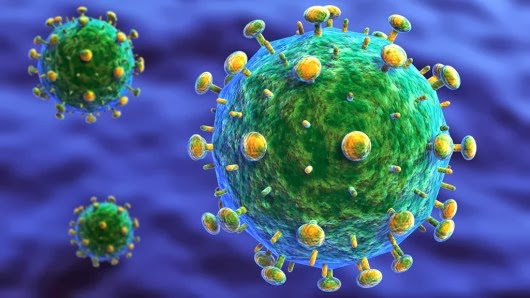 |
| Are our methods for detecting HIV sensitive enough? |
Two HIV+ patients in Boston, one in 2008 and the other in 2010, also received bone marrow transplants to treat leukemia. However their donors did not have the resistance mutation. To the surprise of many doctors, the patients appeared virus free after the procedures and remained that way for years even after discontinuing antiretroviral medication.
Unfortunately now it has been announced that the virus has rebound in both patients. As well as being devastating news to the patients and their families, it has much wider repercussions in the medical world.
After receiving the transplants, the men underwent all sorts of test to measure their viral loads and none were able to detect HIV presence. Yet now it is clear the virus was there all along. This means that the tests we have are not good enough.
There is also the disturbing realisation that people previously described as "cured" may still have the virus lurking somewhere within them. Patients such as the infant cured of HIV will have to be carefully monitored for viral resurgence and those who have seen their viral load reduced to "none" on medication should refrain from discontinuing.
This is a huge set back in research into potential cures for HIV, the virus is even more persistent than previously thought and the design of more sensitive test for viral load is required urgently.
Sunday, 1 December 2013
Paper warning of dangers of GM corn retracted
Back in September of last year, a paper published in the peer-reviewed journal Food and Chemical Toxicology linked the genetically modified corn NK603 to adverse health effects in rats. Although previous long term studies had shown no ill-effects of a diet of GM crops, these two year long study disturbingly showed higher rate of cancer and reduced lifespan of rats fed on NK603 in comparison to the control groups. Publication of these findings led to further public fear and confusion over the actual risk of GM crops.
At the time, many scientists questioned the reliability of the paper "Long-term toxicity of a Roundup herbicide and a Roundup-tolerant genetically modified maize". Cited were issues with the methodology, very low statistical significance linked to small sample size and, significantly, that the strain of rats used in the study (known as Sprague-Dawley rats) are incredibly susceptible to the spontaneous growth of tumors as they age. The $1.4 million study was also plagued with accusations of bias, with conflicts of interests on both the sides of its supporters and those who petitioned for its removal from the journal.
On the 28th November 2013 however, the journal announced the redaction of the paper, following analysis of the data and an investigation into the peer-review process it went through. In a press conference, Corinne Lepage, a Member of the European Parliament and a founding member of one of the funding bodies behind the paper, explained that the retraction of the paper "will not make these questions [about the safety of GM crops] disappear".
It is entirely necessary that further studies into the possible risks of GM crops (and the benefits that they generate too) are carried out. However it is vital that these are performed with the best scientific rigor, to prevent further confusion for the public and embarrassment to those working in these fields.
Removal of the paper is unlikely to dampen the public concern over GM crops that its initial publication generated. Like the now decades-old vaccine scares, the general media finds it much easier to promote scare stories involving small, unreliable (or, in some terrible cases, fabricated) data than to rationally and delicately explain finding to the lay-person. This means that it is on the shoulders of the scientific community to ethically and without bias report real findings in such a way that any rational person is able to determine their reliability for themselves.
At the time, many scientists questioned the reliability of the paper "Long-term toxicity of a Roundup herbicide and a Roundup-tolerant genetically modified maize". Cited were issues with the methodology, very low statistical significance linked to small sample size and, significantly, that the strain of rats used in the study (known as Sprague-Dawley rats) are incredibly susceptible to the spontaneous growth of tumors as they age. The $1.4 million study was also plagued with accusations of bias, with conflicts of interests on both the sides of its supporters and those who petitioned for its removal from the journal.
 |
| NK603 is resistant to the herbicide glyphosate and approved for human consumption |
On the 28th November 2013 however, the journal announced the redaction of the paper, following analysis of the data and an investigation into the peer-review process it went through. In a press conference, Corinne Lepage, a Member of the European Parliament and a founding member of one of the funding bodies behind the paper, explained that the retraction of the paper "will not make these questions [about the safety of GM crops] disappear".
It is entirely necessary that further studies into the possible risks of GM crops (and the benefits that they generate too) are carried out. However it is vital that these are performed with the best scientific rigor, to prevent further confusion for the public and embarrassment to those working in these fields.
Removal of the paper is unlikely to dampen the public concern over GM crops that its initial publication generated. Like the now decades-old vaccine scares, the general media finds it much easier to promote scare stories involving small, unreliable (or, in some terrible cases, fabricated) data than to rationally and delicately explain finding to the lay-person. This means that it is on the shoulders of the scientific community to ethically and without bias report real findings in such a way that any rational person is able to determine their reliability for themselves.
Subscribe to:
Posts (Atom)